

 https://v-i-r.de/wp-content/uploads/2019/02/©georgejmclittle-Fotolia.jpg
2131
3660
viradmin
https://v-i-r.de/wp-content/uploads/2015/11/logo-website-vir-340-165-300x146.png
viradmin2019-02-20 13:14:072020-04-16 15:38:15VIR will Bedenken des Bundeskartellamts ausräumen
https://v-i-r.de/wp-content/uploads/2019/02/©georgejmclittle-Fotolia.jpg
2131
3660
viradmin
https://v-i-r.de/wp-content/uploads/2015/11/logo-website-vir-340-165-300x146.png
viradmin2019-02-20 13:14:072020-04-16 15:38:15VIR will Bedenken des Bundeskartellamts ausräumenCross-organizational engagement
We are committed: Tourism Diversity Action Alliance
Our coalition is an alliance of 28 associations representing all sectors of the diverse tourism industry. Tourism can only thrive when this diversity works together. If key sectors of the travel industry collapse, travel as we know and love it will no longer be possible.
Think Tank: The Future of the Hospitality Industry
The Zukunft der Gastwelt (DZG) think tank is Germany’s first think tank to bring together policymakers, industry associations, and the hospitality sector at the federal level. The hospitality sector brings together high-profile representatives from the tourism, hospitality, foodservice, and leisure industries. We at VIR are partners in this initiative.
In particular, we are also supporters of the #HerzunsererGesellschaft campaign, an initiative that promotes solidarity and mutual respect within the tourism industry. Together, we are sending a strong message about the importance of our industry.
Integration Engine: 360° Guest Experience
However, a new study by the Fraunhofer Institute for Industrial Engineering (IAO), commissioned by the think tank Zukunft der Gastwelt (DZG), shows that when the integration of immigrants into the labor market is achieved quickly and smoothly, it strengthens our social system in the long term and ensures social cohesion. As a central component of a solution for more effectively helping immigrants find work and earn a living, the hospitality sector is virtually indispensable: it is Germany’s most important “engine of integration.” Yet this engine must not be allowed to stall due to a lack of political support and bureaucracy.
National Platform on the Future of Tourism
The Federal Government’s National Tourism Strategy (NTS) aims to help position the tourism sector in a forward-looking, competitive, and sustainable manner. The central instrument for this is the National Platform for the Future of Tourism, which facilitates a long-term dialogue process with all stakeholders relevant to tourism: the federal government, the states, destinations, the industry, and academia are working together to address the challenges surrounding the future-oriented topics of climate neutrality, environmental and nature conservation, securing and recruiting the workforce, digitalization, and competitiveness.
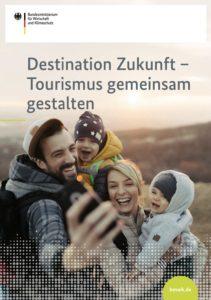
Destination Future – Shaping Tourism Together
The German government aims to support Germany’s tourism industry as it moves toward a sustainable and promising future: a future that addresses the challenges of our time in a constructive and solution-oriented manner, while also ensuring that tourism businesses can operate successfully, sustainably, and competitively.
The contributors to the platform have established connections across all levels, agreed on ambitious goals, and have already launched 27 promising, effective initiatives that are already making good progress.
Remarks by Tourism Coordinator Dieter Janecek at VIROIT 2024
On the second day of the 2024 VIR Online Innovation Days, we welcomed Dieter Janecek, who has served as the German government’s coordinator for the maritime economy and tourism since 2023. In his address, he discussed the current challenges and opportunities facing the tourism industry in Germany.
You can watch the tourism coordinator’s full presentation in the video below.
The latest political news from our blog
https://v-i-r.de/wp-content/uploads/2019/02/©georgejmclittle-Fotolia.jpg
2131
3660
viradmin
https://v-i-r.de/wp-content/uploads/2015/11/logo-website-vir-340-165-300x146.png
viradmin2019-02-20 13:14:072020-04-16 15:38:15VIR will Bedenken des Bundeskartellamts ausräumen https://v-i-r.de/wp-content/uploads/2016/04/VIR-Buller3.jpg
730
1095
viradmin
https://v-i-r.de/wp-content/uploads/2015/11/logo-website-vir-340-165-300x146.png
viradmin2018-12-19 14:52:172020-04-16 15:38:30ETTSA und VIR reichen in Brüssel Beschwerde gegen Lufthansa ein
https://v-i-r.de/wp-content/uploads/2016/04/VIR-Buller3.jpg
730
1095
viradmin
https://v-i-r.de/wp-content/uploads/2015/11/logo-website-vir-340-165-300x146.png
viradmin2018-12-19 14:52:172020-04-16 15:38:30ETTSA und VIR reichen in Brüssel Beschwerde gegen Lufthansa ein https://v-i-r.de/wp-content/uploads/2017/11/Fotolia_22016314_L.jpg
1571
2356
viradmin
https://v-i-r.de/wp-content/uploads/2015/11/logo-website-vir-340-165-300x146.png
viradmin2017-11-13 16:49:172026-04-03 15:59:25Politische Forderungen des VIR
https://v-i-r.de/wp-content/uploads/2017/11/Fotolia_22016314_L.jpg
1571
2356
viradmin
https://v-i-r.de/wp-content/uploads/2015/11/logo-website-vir-340-165-300x146.png
viradmin2017-11-13 16:49:172026-04-03 15:59:25Politische Forderungen des VIR https://v-i-r.de/wp-content/uploads/2017/05/unspecified-3.jpeg
1360
2048
viradmin
https://v-i-r.de/wp-content/uploads/2015/11/logo-website-vir-340-165-300x146.png
viradminMay 9, 2017 11:57:08April 1, 2026, 3:52:10 PMPolitics Meets Tourism – A Look Back
https://v-i-r.de/wp-content/uploads/2017/05/unspecified-3.jpeg
1360
2048
viradmin
https://v-i-r.de/wp-content/uploads/2015/11/logo-website-vir-340-165-300x146.png
viradminMay 9, 2017 11:57:08April 1, 2026, 3:52:10 PMPolitics Meets Tourism – A Look Back https://v-i-r.de/wp-content/uploads/2017/02/0612b070-2801-4fb1-ae78-85ef516519c1.jpg
500
909
VIR Redaktion
https://v-i-r.de/wp-content/uploads/2015/11/logo-website-vir-340-165-300x146.png
VIR Redaktion2017-02-24 14:53:342026-04-01 15:52:39Politik trifft Touristik
https://v-i-r.de/wp-content/uploads/2017/02/0612b070-2801-4fb1-ae78-85ef516519c1.jpg
500
909
VIR Redaktion
https://v-i-r.de/wp-content/uploads/2015/11/logo-website-vir-340-165-300x146.png
VIR Redaktion2017-02-24 14:53:342026-04-01 15:52:39Politik trifft TouristikTourism as an Economic Factor – Key Figures
VIR Facts & Figures on the Online Travel Market 2023
The latest issue is available for free download.
The 18th edition once again presents key figures on the overall German travel market, along with the latest research findings on vacation demand, information-seeking and booking behavior, and German travelers’ preferences regarding vacation types and destinations amid the war in Ukraine, inflation, the climate crisis, and the pandemic.